WhatsApp Support: +44 7481780218 | Email: info@applylicenceuk.com

UK Driving Licence Categories Explained: What Can You Drive?

UK Driving Licence Categories Explained
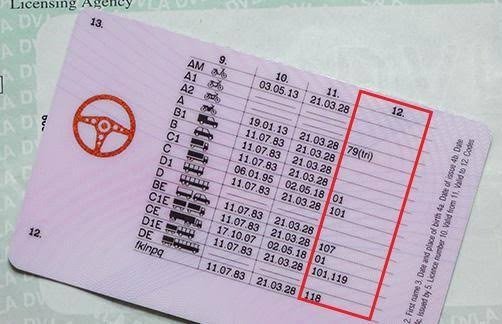
Flip your photocard licence over and you’ll see a dense grid of letters, numbers, and dates that most drivers never fully decode. That grid isn’t decorative it’s the exact legal boundary of what you’re allowed to drive, and driving outside it isn’t a grey area. It invalidates your insurance and can result in prosecution, regardless of how competent a driver you actually are .Category D licence UK
This guide breaks down every current UK licence category in plain English, from the standard car entitlement almost everyone holds through to the specialist categories most drivers never encounter.
Category D licence UK Category D1 licence UK Category DE licence UK
Section 1: Standard Everyday Licences
Category AM — mopeds and light quadricycles
- Covers mopeds and light quadricycles with a maximum design speed of 28mph and weighing no more than 350kg.
- Minimum age: 16.
- Requires CBT-style practical training and a theory element before full use, depending on the specific route taken.
Category B — the standard car licence
This is what most UK drivers hold, and it’s worth defining the key limit properly.
- Maximum Authorised Mass (MAM) is the maximum permitted weight of a vehicle including its full load — not its empty weight, but the figure on the manufacturer’s plate. This is the number that actually determines your entitlement, not how big or heavy a vehicle looks.
- Category B covers vehicles up to 3,500kg MAM, with up to 8 passenger seats in addition to the driver.
- Minimum age: 17.
- This includes cars, most vans, and many motorhomes — anything within that weight and seating limit.
Category B1 — a category most drivers never see
- Covers specific light quadricycles with an unladen weight not exceeding 550kg genuinely distinct from a car, not simply a lighter version of Category B.
- This category is now uncommon on modern licences and largely a historic sub-category rather than something actively used by most drivers.
Section 2: The Master Vehicle Category Matrix
| Category | Vehicle Type | Weight/Seat Limit | Trailer Allowance | Minimum Age |
|---|---|---|---|---|
| AM | Mopeds, light quadricycles | Max 28mph, 350kg | N/A | 16 |
| A1 | Light motorcycles | Up to 125cc, 11kW | N/A | 17 |
| A2 | Medium-power motorcycles | Up to 35kW | N/A | 19 |
| A | Full-power motorcycles | No power limit | N/A | 24 (21 with 2 years on A2) |
| B | Cars, light vans, motorhomes | Up to 3,500kg MAM, 8 seats | Trailer up to 750kg, or heavier within combined-weight rules — see Section 3 | 17 |
| B1 | Light quadricycles | Under 550kg unladen | N/A | 17 |
| BE | Category B vehicle + heavier trailer | 3,500kg tractor vehicle | Trailer weight governed by vehicle/trailer limits, not a fixed licence ceiling | 17 |
| C1 | Medium goods vehicles | 3,500kg–7,500kg MAM | Trailer up to 750kg | 18 |
| C1E | C1 vehicle + trailer | Combination historically capped around 12,000kg — confirm current figure on GOV.UK | Trailer over 750kg | 18 |
| C | Heavy goods vehicles | Over 3,500kg MAM — no upper limit set by the category itself | Trailer up to 750kg | 18 (with Driver CPC), 21 otherwise |
| CE | Articulated lorries, HGV + heavy trailer | No combined maximum set by the licence category itself — vehicle plating and construction-and-use rules govern the actual limit | Trailer over 750kg | 18 (with Driver CPC), 21 otherwise |
| D1 | Minibuses | Up to 16 passenger seats, max 8m length | Trailer up to 750kg | 21 |
| D1E | D1 vehicle + trailer | As above | Trailer over 750kg | 21 |
| D | Buses and coaches | More than 8 passenger seats | Trailer up to 750kg | 21 (with Driver CPC), 24 otherwise |
| DE | D vehicle + trailer | As above | Trailer over 750kg | 21 (with Driver CPC), 24 otherwise |
| F | Agricultural tractors | N/A | Category-specific | Varies |
| G | Road rollers | N/A | Category-specific | Varies |
| H | Tracked vehicles | N/A | Category-specific | Varies |
| K | Ride-on mowers, pedestrian-controlled vehicles | N/A | N/A | Varies |
Where the table says “no upper limit set by the category itself,” that means the licence category doesn’t impose that ceiling but vehicle plating, construction-and-use regulations, and operator licensing requirements still apply on top, and those are what actually cap the real-world limit for a specific vehicle.
fake DVLA documents fake driving licence number fake driving licence details clone driving licence
cloned driving licence stolen driving licence fraudulent driving licence fraudulent DVLA licence
fake Category B licence fake HGV licence fake LGV licence fake motorcycle licence fake Category C licence
fake Category C+E licence fake Category D licence fake D1 licence buy HGV licence without test
buy LGV licence without test buy motorcycle licence without test buy bus licence without test
buy Category C licence without test buy Category C+E licence without test buy Category D licence without test
Section 3: Towing and Trailer Rules Demystified
This is the area with the most genuine confusion, partly because the rules have changed more than once.
What a standard Category B licence lets you tow
- A trailer up to 750kg MAM, without any additional entitlement — this is unrestricted regardless of when you passed your test.
- Beyond 750kg, current rules allow towing a heavier trailer as long as the combined MAM of the vehicle and trailer stays within limits set out in your Category B entitlement — broadly, a combination where the trailer doesn’t exceed the towing vehicle’s own unladen weight, or the combined total stays within the relevant threshold.
- Rule changes since 2021 have simplified this for most current test-passers, reducing the number of drivers who need to book a genuinely separate towing test — but because this area has been revised more than once, always confirm your exact current entitlement on GOV.UK rather than relying on an older article, including this one.
When Category BE is still relevant
- If you passed your test before 1 January 1997, you likely already hold BE entitlement automatically under long-standing grandfather rights.
- If your intended combination genuinely exceeds what current Category B allows on its own, BE is the category that covers it — check your specific licence entitlement rather than assuming.
The two separate limits that both apply
- [ ] Your licence entitlement — what the law allows you to tow
- [ ] The vehicle manufacturer’s rated towing capacity what the specific car is actually built to tow safely
These are not the same number, and you need to stay within both a car legally permitted to tow more than its manufacturer rates it for is still not safe or advisable to load that heavily. Category D1E licence UK
MAM vs actual weight the distinction that matters most
- A trailer’s MAM is its maximum permitted weight fully loaded, as stated by the manufacturer not what it happens to weigh empty, and not what you’ve decided to load it to on a given day.
- Always check the plated MAM figure, not the trailer’s appearance or your own estimate of its weight.
Section 4: Decoding the Back of Your Licence
Beyond the category letters, your licence carries restriction codes numbers that qualify or limit your entitlement further. Category D1E licence UK
Common codes worth knowing:
- 01 — Eyesight correction required (glasses or contact lenses)
- 02 — Hearing/communication aid required
- 10 — Modified transmission
- 15 — Modified clutch
- 20 — Modified braking system
- 40 — Modified steering
- 42 — Modified rear-view mirror(s)
- 43 — Modified driving seat
- 44 — Motorcycle-specific modifications
- 45 — Motorcycles restricted to sidecar use only
- 46 — Restricted to three-wheeled vehicles only
- 70 — Exchange of licence (from a foreign licence)
- 71 — Duplicate licence issued
- 78 — Restricted to vehicles with automatic transmission
- 79(…) — Restricted to vehicles meeting the specification shown in brackets
- 96 — Entitled to tow a combination up to the applicable extended weight limit under specific trailer MAM conditions
- 97 — Not permitted to drive a Category C1 vehicle that requires a tachograph
- 101 — Not for hire or reward
This list isn’t exhaustive — DVLA maintains the complete official code list, and it’s worth checking directly if you see a code here not covered, since additional codes exist for medical conditions, specific vehicle adaptations, and other circumstances. Category D1E licence UK
Section 5: The Risks of Driving Untrained
Driving a vehicle outside your licence entitlement isn’t a paperwork technicality — it carries real legal and financial consequences. Category D1E licence UK
- Invalid insurance — cover is void if you’re driving a vehicle you’re not legally entitled to drive, regardless of how the policy itself was purchased.Category DE licence UK
- Prosecution for driving otherwise than in accordance with a licence — a specific offence, carrying penalty points and a fine.Category DE licence UK
- Vehicle seizure in some circumstances, particularly where a vehicle is being driven with no valid insurance as a result.Category DE licence UK
- No practical defence in “I’m a good driver anyway” entitlement is a legal boundary, not a competence assessment, and courts treat it accordingly.Category DE licence UK
This is particularly relevant for renting a larger van (many exceed 3,500kg MAM once loaded, requiring Category C1), towing a heavier trailer or caravan than your entitlement covers, or driving a minibus for a community group without confirming the passenger-seat threshold against Category B. Category DE licence UK
fake UK driving licence fake driving licence UK buy fake driving licence buy UK driving licence without test
UK driving licence without test driving licence no test buy full driving licence without test
fake DVLA driving licence fake DVLA licence counterfeit driving licence forged driving licence
fake licence for sale driving licence for sale guaranteed UK driving licence guaranteed driving licence
guaranteed driving test pass fake driving test pass fake theory test certificate
fake practical test certificate fake DVSA certificate
Frequently Asked Questions
How do I check exactly what my licence covers? Use the official “View your driving licence” service on GOV.UK with your licence number, National Insurance number, and postcode — this is more reliable than reading an older physical card if you’ve recently added a category. Category D1 licence UK
Can I drive a van on a Category B licence? Yes, provided its MAM doesn’t exceed 3,500kg. Larger vans, particularly loaded box vans, can exceed this and require Category C1, Category D1E licence UK
Do I need a separate test to tow a caravan? Not necessarily — current Category B entitlement covers a meaningful range of trailer combinations on its own, though the exact limit depends on the vehicle and trailer weights involved. Check your specific entitlement before assuming. Category D1 licence UK
What does the 78 code mean on my licence? It means you’re restricted to automatic transmission vehicles only, typically because you passed your test in an automatic car. Category D1 licence UK
Conclusion
Your licence category grid isn’t just administrative detail — it’s the exact legal line between what you’re covered to drive and what you’re not, and that line moves depending on weight, seating, and trailer combinations that aren’t always obvious from a vehicle’s size alone. Before renting a larger van, towing anything substantial, or driving a vehicle you’re not entirely sure about, check your actual current entitlement directly on the official GOV.UK portal rather than assuming — it takes two minutes and settles the question definitively. Category D1 licence UK
Fake US banknotes Counterfeit US currency Fake dollar bills Counterfeit dollar bills Fake $20 bills Fake $50 bills Fake $100 bills Counterfeit money for sale Fake money for sale Counterfeit currency online Fake dollars online Buy counterfeit currency Sell counterfeit currency Forged US banknotes
Undetectable counterfeit money